Fertility Supplements for Women: A Science-Backed Guide


Fertility Supplements for Women: A Science-Backed Guide to Supporting Your Hormones and Egg Quality
For women trying to conceive — whether naturally, with IUI, or through IVF — targeted fertility supplements for women can meaningfully support reproductive health at a biological level. Fertility supplements for women aren't about quick fixes; they're about systematically addressing nutritional gaps, reducing oxidative stress, and providing your reproductive system with the raw materials it needs to function optimally.
This guide covers the most important fertility supplements for women backed by clinical research, explains how they work, and helps you build a supplement protocol tailored to your stage of the fertility journey. Conceive Plus offers a complete range of fertility supplements for women across Europe, formulated with the most bioavailable forms of each key nutrient.
Why Do Women Need Fertility Supplements?
Even a well-balanced diet can fall short of providing optimal levels of every nutrient your reproductive system needs — particularly at the therapeutic doses studied in clinical research. Several factors increase the need for targeted fertility supplements for women:
- Nutrient depletion: Previous hormonal contraceptive use depletes folate, B6, B12, magnesium, and zinc
- Absorption issues: MTHFR gene variants impair folate metabolism in 40–60% of the population
- Age-related decline: Egg quality naturally declines after 35, driven partly by mitochondrial dysfunction — which CoQ10 can address
- PCOS and insulin resistance: Increase demand for specific nutrients (inositol, chromium, magnesium)
- Oxidative stress: Lifestyle factors (stress, pollution, diet) increase free radical burden on eggs
- Seasonal deficiency: Vitamin D deficiency is near-universal in northern latitudes during winter
Fertility supplements for women bridge these gaps, supporting the 90-day egg development process with the micronutrients it needs at every stage.
Methylfolate: The Foundation of Female Fertility Supplementation
Ready to support your fertility journey?
Conceive Plus offers clinically formulated fertility supplements and lubricants trusted by couples worldwide.
Shop Conceive Plus →Folate (vitamin B9) is the most fundamental nutrient for women trying to conceive. It's required for DNA synthesis, cell division, and neural tube formation — all critical in the earliest weeks of pregnancy. But the form matters enormously.
Synthetic folic acid must be converted to its active form, L-methylfolate (5-MTHF), in the body. Women with MTHFR gene variants — which affect a significant proportion of the population — have impaired ability to make this conversion. This means synthetic folic acid may not provide adequate protection against neural tube defects or support optimal egg quality.
Methylfolate bypasses the MTHFR conversion bottleneck entirely, delivering the bioactive form directly. Women with normal MTHFR function also absorb methylfolate more readily than synthetic folic acid.
Recommended dose: 400–800 mcg methylfolate daily — start at least 3 months before trying to conceive
Conceive Plus fertility supplements for women use methylfolate rather than synthetic folic acid, ensuring maximum benefit regardless of genetic variation. This is one of the key reasons Conceive Plus stands out among fertility supplements for women.
CoQ10 (Ubiquinol): Protecting Egg Quality
Coenzyme Q10 is perhaps the most exciting of all fertility supplements for women to emerge from recent research. Eggs are the most mitochondria-dense cells in the human body — they require enormous energy (ATP) to complete their maturation and support early embryo development. CoQ10 is essential for mitochondrial energy production.
As women age, CoQ10 levels in ovarian tissue naturally decline — which is believed to be a key driver of age-related egg quality decline. Supplementing with CoQ10 effectively replenishes these levels.
Multiple studies, including research from Cornell University, have demonstrated that CoQ10 supplementation before IVF stimulation increases the number of mature oocytes, improves fertilisation rates, and enhances embryo quality — particularly in women over 35 and poor responders.
Best form: Ubiquinol (the active, reduced form) — significantly better absorbed than ubiquinone
Recommended dose: 200–600 mg daily
Timing: Take with a fat-containing meal; begin at least 60–90 days before intended conception or egg retrieval
Vitamin D3: The Reproductive Hormone Regulator
Vitamin D is technically a prohormone — its receptors are present throughout the reproductive system, including in ovarian follicles, the uterine lining, and embryonic tissue. Among fertility supplements for women, vitamin D is one of the most consistently overlooked despite overwhelming evidence of its importance.
Mechanistically, vitamin D supports:
- Ovarian follicle development and oocyte maturity
- Endometrial receptivity and implantation
- Immune tolerance of the embryo (preventing miscarriage)
- AMH levels (anti-Mullerian hormone — a marker of ovarian reserve)
- Regular menstrual cycles in women with PCOS
Studies consistently find that women with serum vitamin D levels above 30 ng/mL have better IVF outcomes than deficient women. A 2019 meta-analysis of 2,700 IVF patients found women with sufficient vitamin D had a 46% higher clinical pregnancy rate.
Recommended dose: 1,000–4,000 IU vitamin D3 daily (test first and target 40–60 ng/mL)
Omega-3 Fatty Acids: Anti-Inflammatory Support for Fertility
Chronic low-grade inflammation is one of the most underappreciated drivers of female infertility. Conditions including endometriosis, PCOS, and unexplained infertility all have inflammatory components. Omega-3 fatty acids (EPA and DHA) are potent anti-inflammatories that also directly support reproductive physiology.
Research demonstrates that omega-3s:
- Improve oocyte quality and increase the proportion of mature eggs in IVF cycles
- Support endometrial thickness — critical for successful implantation
- Reduce prostaglandins associated with uterine contractions that can impair implantation
- Support fetal brain and eye development from the earliest weeks of pregnancy
- Reduce miscarriage risk in some studies
Recommended dose: 1,000–2,000 mg combined EPA+DHA daily
Source: High-quality purified fish oil or algae-based omega-3 (vegan-friendly)
Inositol: The PCOS Fertility Supplement
Inositol — particularly myo-inositol and D-chiro-inositol — is a standout among fertility supplements for women with PCOS. Inositol is a naturally occurring compound involved in insulin signalling, ovarian function, and egg maturation.
In women with PCOS, inositol supplementation has been shown to:
- Restore ovulation in up to 62% of previously anovulatory women (meta-analysis, Gynecological Endocrinology)
- Reduce LH levels and LH:FSH ratio
- Improve egg and embryo quality in IVF
- Reduce insulin resistance and testosterone levels
- Improve menstrual cycle regularity
The optimal ratio of myo-inositol to D-chiro-inositol is 40:1, reflecting physiological levels found in follicular fluid. Look for fertility supplements for women with this specific ratio for maximum benefit.
Recommended dose: 4,000 mg myo-inositol + 100 mg D-chiro-inositol daily (the 40:1 ratio)
Iron: Often Overlooked, Always Important
Iron deficiency is the most common nutritional deficiency worldwide — and its impact on female fertility is significant. Low ferritin levels (below 20 ng/mL) can suppress ovulation, impair follicular development, and increase miscarriage risk.
The Nurses' Health Study found that women supplementing with non-haem iron (plant-based iron) had a 40% lower risk of ovulatory infertility than non-supplementers. Before supplementing with iron, test your ferritin level — excess iron is pro-oxidant and can be harmful. Target ferritin of 40–80 ng/mL before and during conception.
Zinc, B6, and B12: Supporting the Whole Hormonal Axis
Zinc is critical for oocyte maturation, follicular development, and the fertilisation cascade. Zinc-dependent enzymes are activated within seconds of sperm-egg contact — making adequate zinc essential for successful fertilisation.
Vitamin B6 supports progesterone production in the luteal phase — women with luteal phase deficiency often have low B6. B6 also reduces nausea once pregnancy is achieved and supports overall hormonal balance.
Vitamin B12 is essential for DNA synthesis, cell division, and methylation. Deficiency is particularly common in vegans, vegetarians, and women on metformin. Low B12 is associated with poor egg and embryo quality and early pregnancy loss.
Conceive Plus Fertility Supplements for Women: Complete Support Across Europe
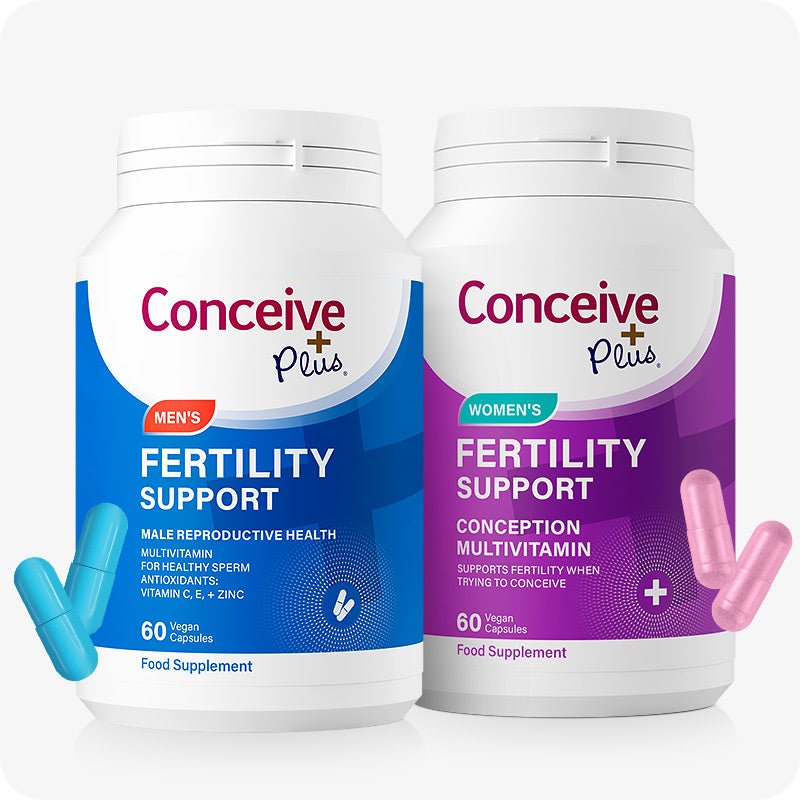
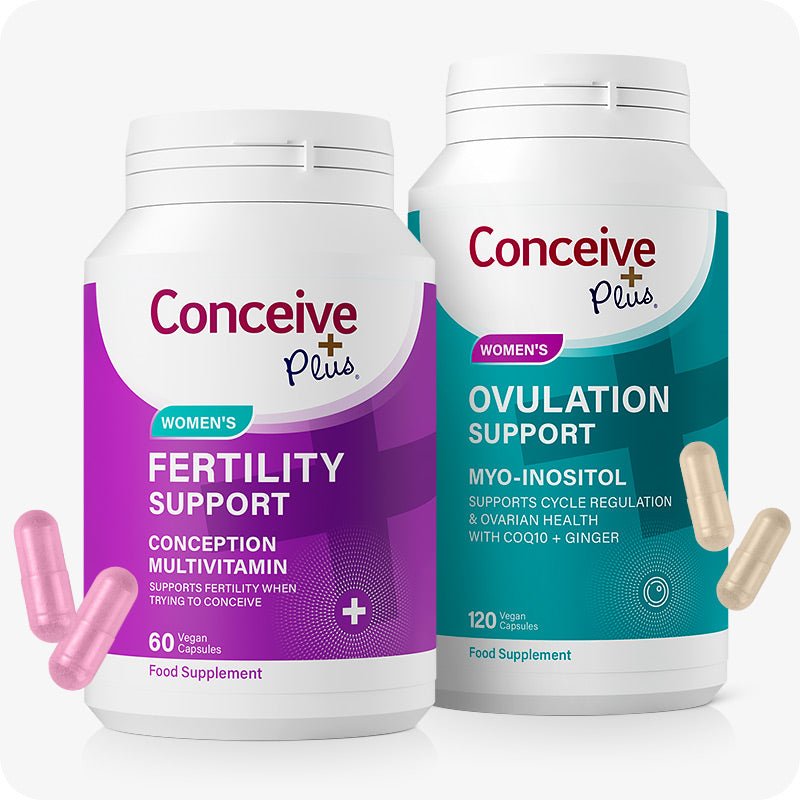
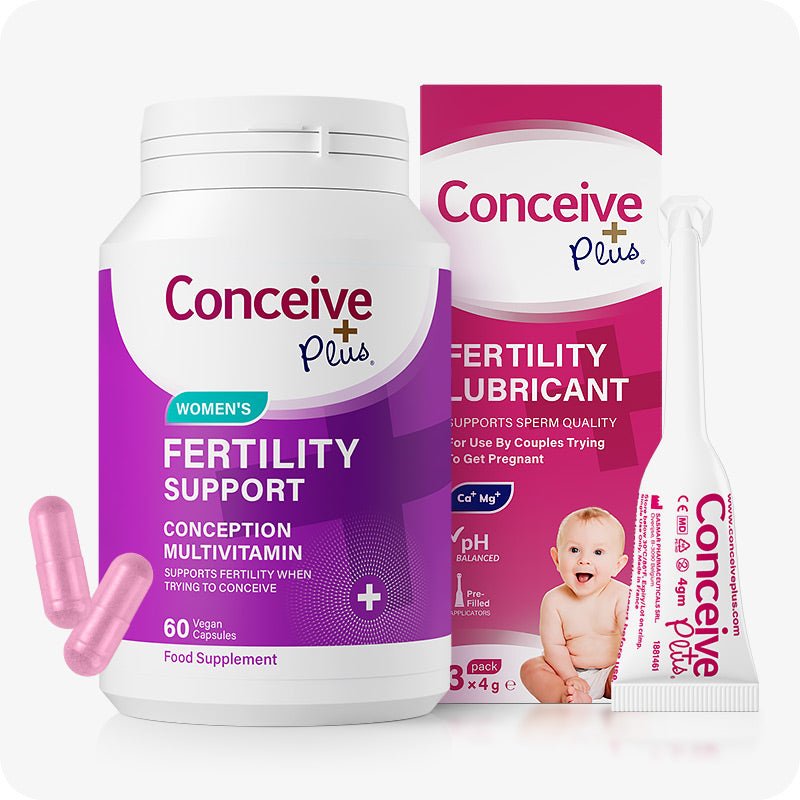
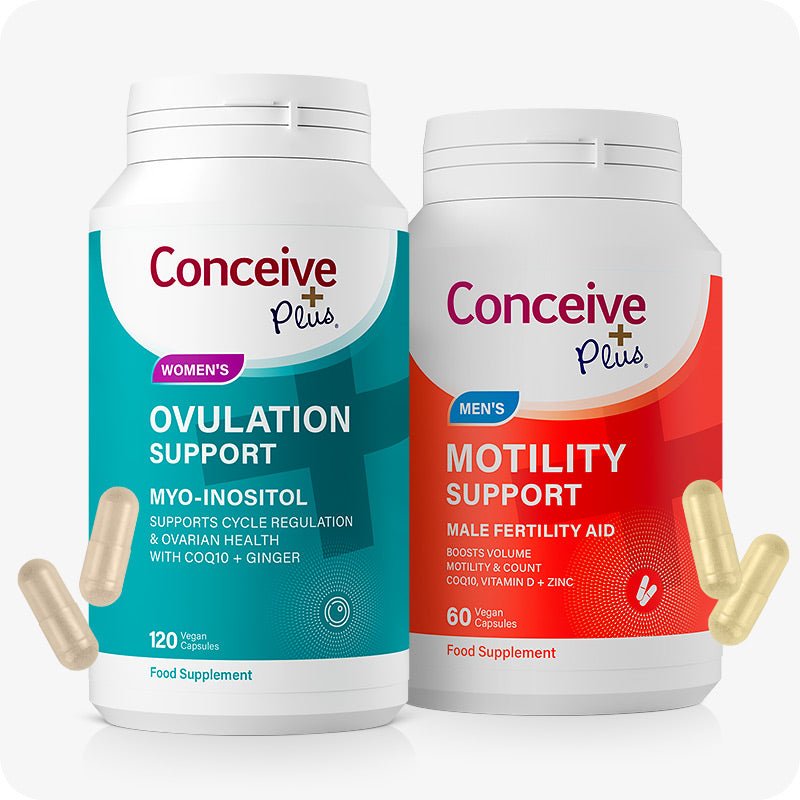
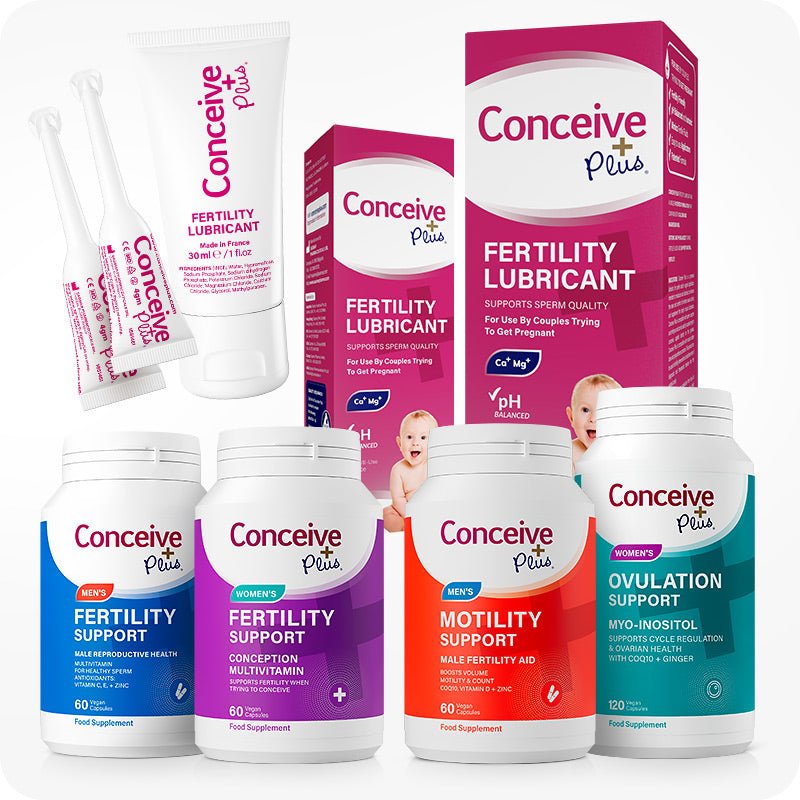
Conceive Plus has developed a range of fertility supplements for women specifically designed to address the full spectrum of nutritional needs from preconception through early pregnancy. The Conceive Plus formulations include methylfolate, CoQ10 (ubiquinol), vitamin D3, omega-3s, and key micronutrients in their most bioavailable forms — no synthetic folic acid, no cheap forms that your body has to convert.
Whether you're just starting to try, preparing for IVF, or managing PCOS, Conceive Plus fertility supplements for women provide the scientifically supported nutritional foundation your fertility journey deserves. Available across Europe at conceiveplus.eu.
Frequently Asked Questions: Fertility Supplements for Women
Q: When should I start taking fertility supplements?
A: Ideally 3 months (90 days) before you want to conceive, as this covers the full maturation cycle of a developing egg. However, starting sooner is better — even starting today is better than not starting.
Q: Can fertility supplements help if I have low AMH?
A: Low AMH indicates reduced ovarian reserve (fewer remaining follicles), not reduced egg quality. CoQ10, DHEA (under medical supervision), and vitamin D may support egg quality in women with DOR and improve IVF outcomes, though they cannot increase follicle count.
Q: Are fertility supplements safe to take during an IVF cycle?
A: Most are, but follow your clinic's guidance. Many REs recommend continuing folate, vitamin D, and omega-3 through stimulation, but pausing high-dose CoQ10 and DHEA. Always disclose all supplements to your reproductive endocrinologist.
Q: Do fertility supplements interact with medications?
A: Some can. Iron can interact with thyroid medication (take separately). Omega-3s may interact with blood thinners. High-dose vitamin E can also act as a mild blood thinner. Always discuss your supplements with your healthcare provider.
Q: Can I just take a regular prenatal vitamin instead of fertility-specific supplements?
A: A good prenatal covers the basics (folate, iron, iodine, vitamin D). Fertility-specific supplements go beyond this — providing therapeutic doses of CoQ10, inositol (for PCOS), omega-3s, and other nutrients at levels not found in standard prenatals. Think of a prenatal as the foundation and targeted supplements as the additional support.
Q: How long until I see results from fertility supplements?
A: The full effect on egg quality takes 90 days (one egg development cycle). Hormonal improvements from inositol in PCOS can appear within 1–3 months. Vitamin D status improves within 4–8 weeks of adequate supplementation.
Q: Are there any fertility supplements I should avoid?
A: Avoid high-dose vitamin A (retinol) — teratogenic in excess. Certain herbs (dong quai, black cohosh, senna) should be avoided. Discuss any supplement above basic doses with your doctor, especially during treatment cycles.
Q: Is there a difference between European and US fertility supplement formulations?
A: Regulatory standards differ between the EU and US, but quality markers are consistent: look for GMP-certified manufacturers, third-party testing, and active ingredient forms (methylfolate, ubiquinol, D3). Conceive Plus is available across European markets with regionally appropriate formulations.
Take the Next Step with Conceive Plus
Join hundreds of thousands of couples who trust Conceive Plus for their fertility journey. Our products are FDA-cleared, clinically researched, and designed for real results.
Explore Conceive Plus Products