Can You Get Pregnant After Ovulation? Understanding the 24-Hour Window


What if the most important 24 hours of your month are governed by a biological clock that doesn't care about your schedule? It's a common source of anxiety, and many women find themselves asking: can you get pregnant after ovulation? It's deeply frustrating to track your cycle diligently only to feel like you've missed the mark because of a late test or a busy workday.
We understand that confusion, especially when inconsistent tracking results make you second-guess your body's signals. You're about to discover the biological reality of conceiving after an egg is released and how to time your efforts for the best possible results in 2026. We'll explore the 12 to 24-hour lifespan of the egg, the difference between predicting and confirming ovulation with modern tools like Tempdrop or Natural Cycles, and how to build a reliable strategy for your next cycle if this one didn't go as planned.
Key Takeaways
- Learn why the egg's 12 to 24-hour lifespan creates a strict biological deadline for successful fertilization.
- Discover the specific physical signs, like changes in cervical mucus, that confirm your fertile window has closed for the month.
- Understand the biological reality of whether you can you get pregnant after ovulation and why the "sperm marathon" makes timing critical.
- Compare the probability of conception across different days to see why starting your efforts before ovulation is the most effective strategy.
- Build a data-driven plan for your next cycle using past results to pinpoint your most fertile days with greater precision.
The Biological Reality of Pregnancy After Ovulation
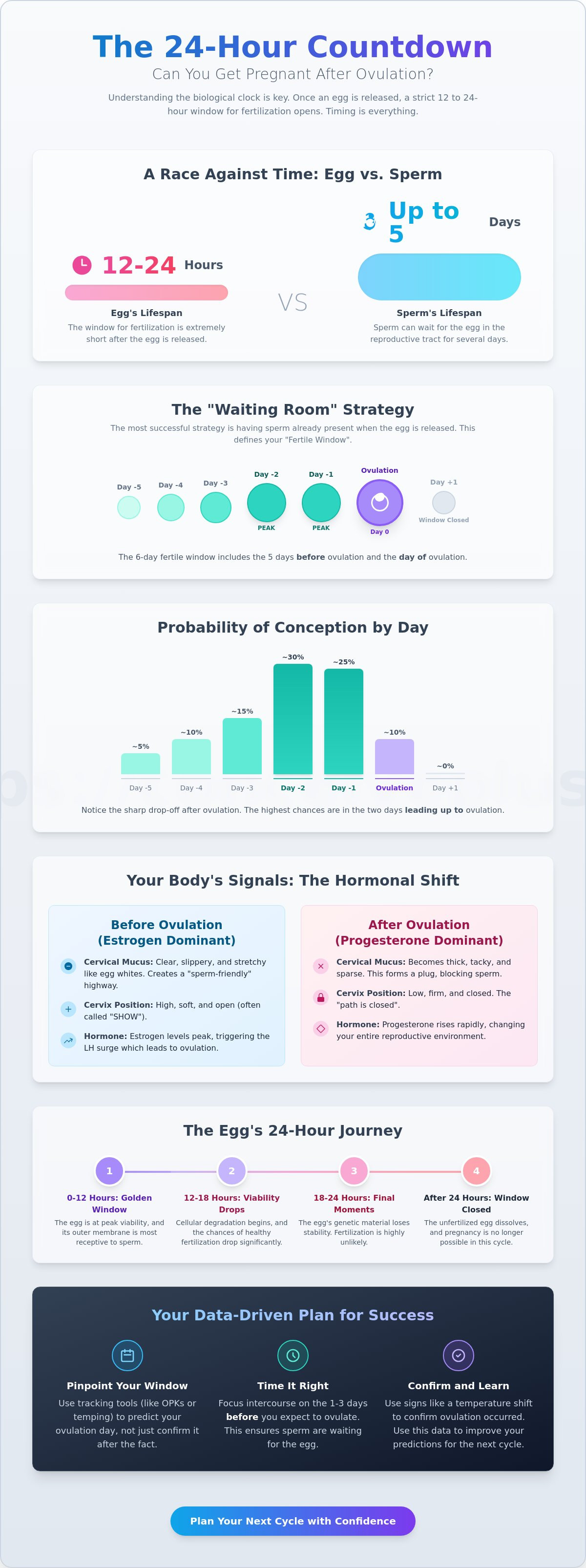
Conception is a high-stakes race against a very fast clock. It occurs only when a sperm successfully fertilizes a mature egg during its brief period of viability. Once the ovary releases an egg, a 12 to 24-hour countdown begins. This timeframe is the ultimate biological bottleneck. If fertilization doesn't happen within these few hours, the egg begins to disintegrate, and the chance for pregnancy in that cycle vanishes. While it's technically possible to conceive once the egg is on its journey, the window is incredibly narrow.
The fallopian tubes act as the essential meeting ground for this process. After the egg leaves the follicle, it's swept into the tube where it waits for a sperm to arrive. If you're asking "can you get pregnant after ovulation," the answer is yes, but only if the sperm reaches the egg before that 24-hour limit expires. Once that time passes, the hormonal environment changes, and the egg is no longer capable of being fertilized.
To better understand this concept, watch this helpful video:
Can Fertilization Happen on Day 15 or 16?
Many women wonder if they can conceive on day 15 or 16 of their cycle. The answer depends entirely on when the egg was actually released. Not everyone follows a textbook 28-day cycle where ovulation happens on day 14. If you have a longer cycle, you might ovulate on day 17. In that case, having sex on day 16 is actually pre-ovulatory sex, which is very effective. It's easy to mistake a late-cycle ovulation for a post-ovulatory pregnancy. Clinical ovulation is a specific event, but the symptoms you "feel" can sometimes be misleading. Using an ovulation calculator can help you estimate your specific dates based on your own cycle history.
Why Sperm Must Be Waiting for the Egg
Because the egg's lifespan is so short, the most successful strategy involves having sperm already present in the fallopian tubes. This is often called the "waiting room" effect. Sperm can survive in fertile cervical mucus for up to five days, whereas the egg lasts less than one. This massive difference in survival rates is why sex before the process of ovulation usually leads to higher pregnancy rates. The fertile window is the five days leading up to and the day of ovulation. By the time the egg is released, the sperm should ideally be through the cervix and ready to meet the egg immediately. If you wait until you're sure you've ovulated, you might already be too late.
The 24-Hour Countdown: What Happens to the Egg?
The moment of ovulation is a violent but necessary rupture. When the Luteinizing Hormone (LH) reaches its peak, the dominant follicle on the ovary bursts, releasing a mature egg. This marks the start of a very short life. The egg survives about 12 to 24 hours once it leaves the protective environment of the ovary. During the first 6 to 12 hours, the egg is at its peak viability. Its outer membrane is most receptive to sperm penetration during this brief window, making it the "golden hour" for conception.
As the hours tick by, the egg enters a phase of cellular degradation. The cytoplasm begins to break down, and the genetic material inside loses stability. By the 18-hour mark, the chances of a healthy fertilization drop significantly. The empty follicle that once housed the egg doesn't just disappear; it transforms into a temporary gland called the corpus luteum. This gland starts pumping out progesterone, which signals to the rest of your reproductive system that the fertile window is slamming shut. The clock doesn't stop for anyone.
Hormonal Shifts: From Estrogen to Progesterone
Progesterone changes your internal landscape almost instantly. While estrogen made your cervical mucus slippery and stretchy to help sperm swim, progesterone makes it thick, tacky, and sparse. This creates a "hostile" environment where sperm simply cannot travel. The cervix also undergoes a physical change, becoming firmer and lower in the vaginal canal. If you're asking yourself, "can you get pregnant after ovulation?", these physical barriers are your body's way of saying the path is closed. New sperm arriving after these shifts are unlikely to even reach the fallopian tubes.
The Luteal Phase Transition
If no sperm fertilizes the egg within that 24-hour countdown, the egg begins to dissolve. Once the egg dissolves, pregnancy is biologically impossible until the next cycle. Your body then transitions fully into the luteal phase, preparing the uterine lining for either a period or the potential implantation of an embryo that was created hours earlier. Because the window is so unforgiving, using specialized fertility products during your peak days can help create a more supportive environment for sperm before that 24-hour clock runs out. If fertilization didn't happen, the corpus luteum will eventually wither, leading to the hormonal drop that triggers menstruation.
Spotting the Signs: How to Know if You’ve Already Ovulated
Identifying the exact moment your fertile window closes requires a shift in focus. Instead of looking for signs that ovulation is coming, you must learn to recognize the signals that it has already passed. This is the only way to answer the lingering question: can you get pregnant after ovulation this month, or has the door already shut? By tracking specific biological shifts, you can move from guesswork to confirmation.
Successful cycle tracking involves a multi-indicator approach. Relying on a single symptom often leads to frustration because external factors like stress or illness can mimic fertile signs. To get a clear picture, follow these steps:
- Monitor cervical mucus: Watch for the transition from "egg-white" slippery fluid to a thick, sticky, or creamy consistency.
- Track your Basal Body Temperature (BBT): Look for a sustained rise of at least 0.2 to 0.5 degrees Fahrenheit that stays elevated for several days.
- Analyze LH surge patterns: Use Ovulation Predictor Kits (OPKs) to find your peak. Modern digital OPKs are over 99% accurate at detecting the Luteinizing Hormone surge that precedes the egg's release.
- Observe secondary symptoms: Pay attention to breast tenderness, mild pelvic discomfort (mittelschmerz), or slight bloating, which are common post-ovulatory reactions to rising progesterone.
- Use digital confirmation: Tools like the FDA-cleared Natural Cycles app or wearable sensors like Tempdrop can automate data collection. According to peer-reviewed studies, Tempdrop identifies the fertile window in almost 99% of cycles.
The 'Dry Day' Rule
One of the most reliable ways to know your window has closed is the sudden "drying up" of vaginal moisture. During your peak fertile days, high estrogen levels produce abundant, watery mucus. Almost immediately after the egg is released, progesterone takes over. This hormone causes your cervical mucus to become thick and tacky, effectively creating a biological plug that prevents sperm from entering the uterus. If you notice a "dry day" following a period of high moisture, it's a strong indicator that the 24-hour viability window has likely expired. This "hostile" mucus is a natural barrier, making it nearly impossible to get pregnant after ovulation has concluded for the cycle.
The BBT Shift Explained
While OPKs are excellent for prediction, Basal Body Temperature is the gold standard for confirmation. Your temperature doesn't rise until after the egg has been released and the corpus luteum begins producing progesterone. This means a temperature spike tells you what happened yesterday, not what is happening now. To use this effectively, you must take your temperature at the same time every morning before getting out of bed. If you missed your window this month, using an ovulation calculator alongside your BBT data can help you predict your next peak more accurately. Avoid common mistakes like taking your temperature after drinking water or after a restless night, as these can cause false readings.
Maximizing Your Odds: Pre-Ovulation vs. Post-Ovulation Sex
Timing sex correctly is the difference between a high probability of success and a wasted month. If you're asking, "can you get pregnant after ovulation," you need to look at the statistical drop-off. Research shows the probability of conception peaks at roughly 25% to 30% when sex occurs two days before the egg is released. By the day after ovulation, those odds plummet to nearly zero. This happens because sperm require several hours to complete a process called capacitation, which is essentially a final "power-up" that allows them to penetrate the egg's outer layer.
The "Sperm Marathon" is a grueling journey. Sperm must travel through the cervix, across the uterus, and into the fallopian tubes. If sex happens after the egg is already in the tube, the sperm are playing a desperate game of catch-up. Having sex one or two days before ovulation (O-1 or O-2) ensures a healthy supply of sperm is already waiting in the "waiting room" of the fallopian tubes. They are ready to strike the moment the egg emerges. When sex occurs on the day of ovulation (O-day), the egg is already aging by the time the sperm arrive, which significantly lowers the chances of a healthy pregnancy.
Your biological age and overall health also play a role in this window. For women in their late 30s or early 40s, the 24-hour viability window may be even shorter. Cellular degradation can happen faster, and the hormonal signals that maintain the fertile environment may not be as robust. Maintaining a healthy lifestyle is essential, but it can't override the fundamental biological deadline of the egg.
Is Sex After Ovulation Ever Worth It?
While the biological odds are low, sex after your suspected ovulation date still has value. Maintaining intimacy helps reduce the stress and clinical feeling that sometimes accompanies a journey toward conception. There is also the rare possibility of hyperovulation, where a second egg is released. While this usually happens within 24 hours of the first, it's a reason not to give up entirely. However, you should never assume you are "safe" from pregnancy if you aren't using protection; cycles can shift unexpectedly due to stress or illness, moving your window without warning.
Improving the Environment for Late Conception
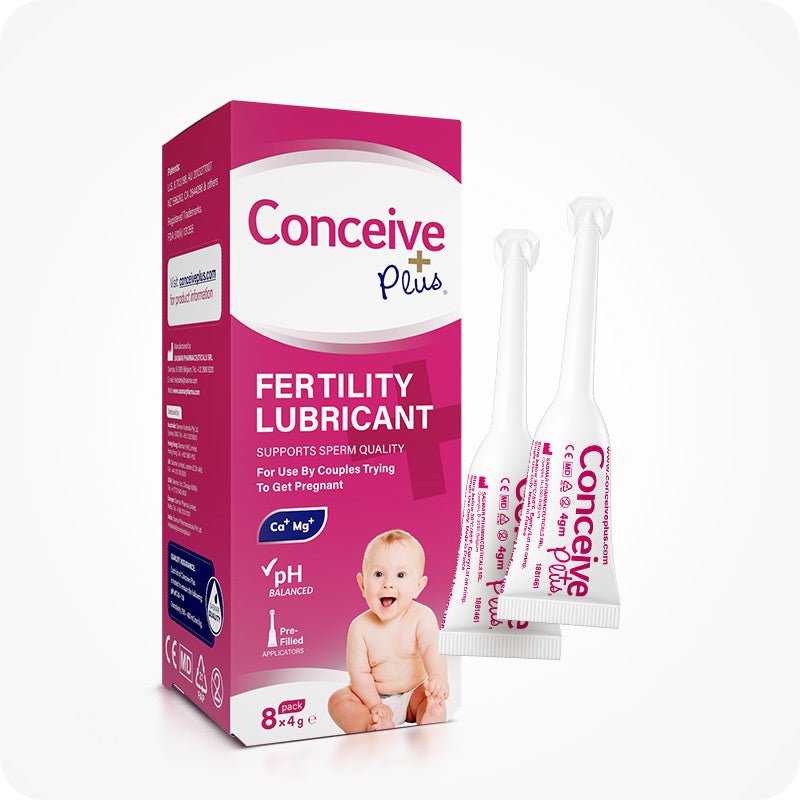
If you are trying to conceive right at the edge of your window, the vaginal environment must be perfect. As progesterone rises, the vagina becomes more acidic, which can be lethal to sperm. Standard lubricants often exacerbate this problem by having the wrong pH level. Using fertility-friendly lubricants can help mimic the natural pH of fertile cervical mucus, giving sperm a better chance of surviving the journey to a late-arriving egg. Supporting your body with proper nutrition during the luteal phase also ensures that if fertilization does occur, the uterine lining is ready for a successful implantation.
Taking Control of Your Next Fertile Window
Missing the 24-hour window can feel like a setback, but it's actually an opportunity to refine your data. If you found yourself asking can you get pregnant after ovulation because you missed your peak this month, use that information to adjust your strategy for the next cycle. Most women need a few months of consistent tracking to see the unique patterns in their biological clock. By logging your LH surges and BBT shifts, you'll be able to predict your next fertile window with much higher accuracy.
The most successful couples don't wait for a positive test result to start trying. Instead, they begin their efforts three to five days before the expected peak. This ensures that a healthy population of sperm is already present in the fallopian tubes when the egg is released. If you've been tracking for several months and still struggle to pinpoint your window, it might be time to consult a fertility specialist. Experts generally suggest seeking professional advice after 12 months of trying if you're under 35, or after six months if you're over 35.
Mastering Your Cycle with the Right Tools
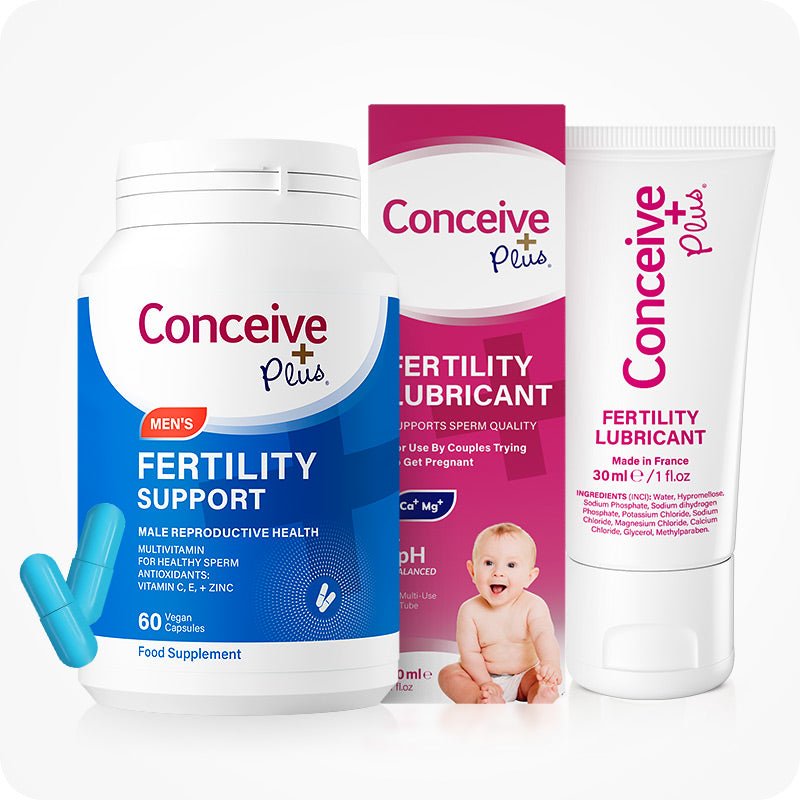
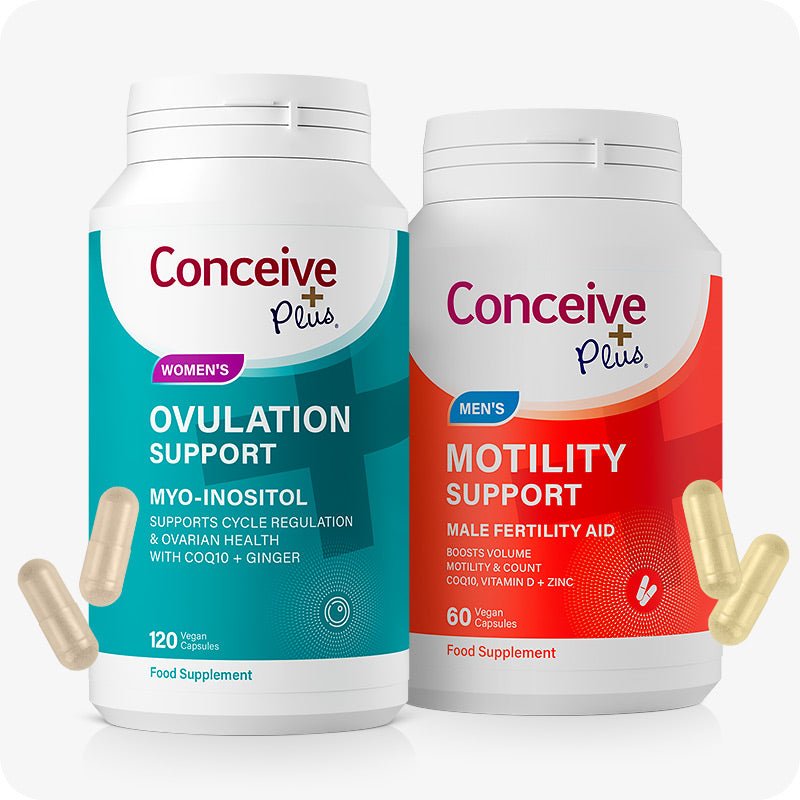
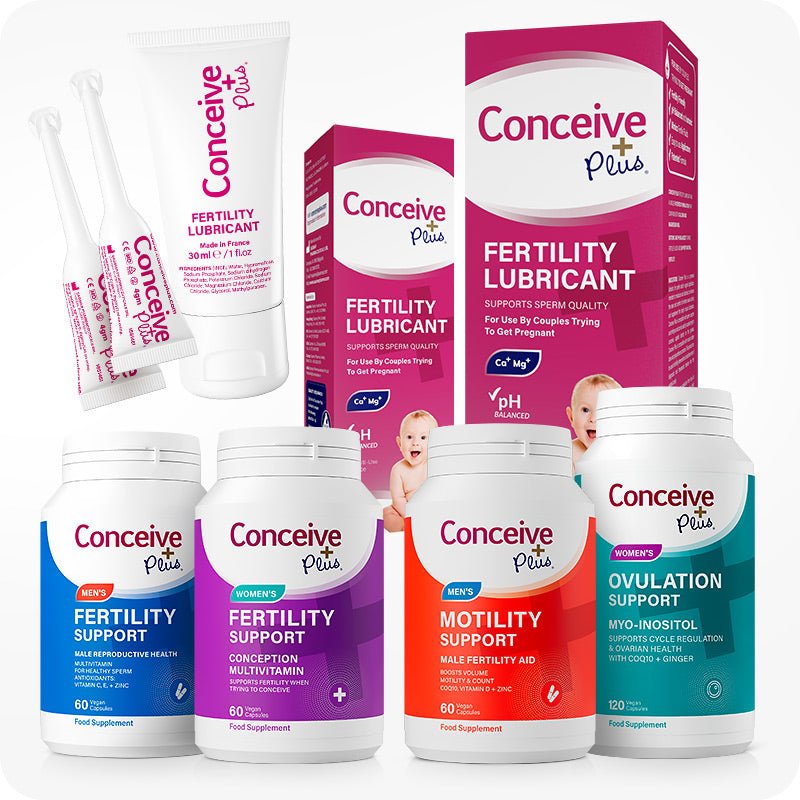
Technology has made tracking far more precise than the old calendar method. You can utilize the Conceive Plus Ovulation Calculator to identify your likely peak days based on your recent cycle history. However, don't rely on dates alone. Tracking multiple biomarkers, including LH levels, Basal Body Temperature, and cervical mucus, provides the clearest picture of your hormonal health. You can also prepare your body for the next cycle by incorporating fertility support bundles that provide essential nutrients for both partners, ensuring you're ready when the next window opens.
Setting a 2026 Conception Strategy
Planning ahead for 2026 allows you to treat your fertility with the same care as any other major life goal. Schedule "fertility dates" on your calendar during your predicted five-day window to ensure you prioritize intimacy during the most effective time. High stress levels can actually delay the process of ovulation, so try to keep your perspective balanced. One missed day isn't a failure; it's just one part of a longer journey. To stay prepared every month without the stress of last-minute shopping, explore special offers on fertility essentials. Having your supplies ready well before your next window opens helps you stay focused and calm.
Master Your Timing for Future Success
Understanding the strict 24-hour lifespan of an egg transforms how you approach your fertility journey. We've explored why the most effective strategy involves having sperm waiting in the fallopian tubes before the egg is even released. While the biological question of can you get pregnant after ovulation has a very narrow "yes," focusing on the days leading up to your peak gives you the highest statistical chance of success. By combining tools like BBT tracking and cervical mucus monitoring, you take the guesswork out of your monthly cycle.
Preparation is the key to reducing anxiety and staying in control. You don't have to navigate this journey alone. Our scientifically formulated fertility support is trusted by millions of couples worldwide and is available in over 70 countries to help you create the best possible environment for conception. Shop All Fertility Products & Bundles to Prepare for Your Next Window and give your body the support it deserves. Your next cycle is a fresh start; with the right data and tools, you're better equipped than ever to achieve your goals. Stay positive and keep moving forward.
Frequently Asked Questions
Can you get pregnant 2 days after ovulation?
It's biologically impossible to conceive two days after the egg has been released. Since the egg only survives for a maximum of 24 hours, it will have already begun to break down and be absorbed by the body by the 48-hour mark. If you find you've conceived despite thinking you were two days past your peak, it's likely that your ovulation occurred later in the cycle than you initially estimated.
How many hours after ovulation can you conceive?
You can typically conceive for up to 24 hours after the egg is released from the follicle. However, the highest chances of success occur within the first 6 to 12 hours of that window. As the egg travels down the fallopian tube, its cellular integrity begins to decline. This makes it much harder for sperm to successfully penetrate the membrane and complete the fertilization process before time runs out.
What are the signs that ovulation has already happened?
The most reliable signs of completed ovulation include a sustained rise in your basal body temperature and a change in cervical fluid. Your mucus will transition from a slippery, raw egg-white texture to a tacky or creamy consistency almost immediately. Some women also notice that their cervix feels lower and firmer to the touch. These shifts are driven by the hormone progesterone, which dominates the second half of your cycle.
Is it possible to ovulate twice in one cycle?
While you won't have two separate ovulation events weeks apart, it's possible to release two eggs within the same 24-hour period. This process, known as hyperovulation, is what leads to fraternal twins. Once the first egg is released, the resulting rise in progesterone prevents any further follicles from rupturing during that cycle. This biological reality is why the answer to can you get pregnant after ovulation usually focuses on that single 24-hour window.
Does sperm live longer than the egg?
Yes, sperm has a significantly longer lifespan than the egg. While a mature egg only survives for 12 to 24 hours, healthy sperm can live inside the female reproductive tract for up to five days in fertile mucus. This biological difference is why timing sex before the egg is released is far more effective for conception than trying to catch the egg once it's already on its journey.
Can I get pregnant if I have sex the day after my LH surge?
Yes, having sex the day after an LH surge is actually one of the best times to try. An LH surge typically precedes ovulation by 24 to 36 hours. This means if you see a positive result on an ovulation predictor kit today, you'll likely ovulate tomorrow. Having sex the following day ensures that fresh sperm are entering the fallopian tubes exactly when the egg is released, maximizing your fertile window.
What happens to the egg if it isn't fertilized?
If fertilization doesn't occur, the egg begins a process of cellular degradation within 24 hours. It eventually dissolves and is absorbed by the lining of the fallopian tubes. Because the egg is microscopic, you won't notice it leaving your body. The corpus luteum then stops producing progesterone after about two weeks, which triggers the shedding of the uterine lining and the start of your next period.
How accurate are ovulation calculators for post-ovulation timing?
Ovulation calculators are useful for predicting future patterns but are less accurate for confirming the exact status of your current window. These tools rely on averages from your previous cycles to estimate your next fertile window. Since stress, travel, or illness can delay the release of an egg, a calculator might suggest the window has closed when can you get pregnant after ovulation is actually still a possibility for that specific month.